


I don’t make promises about forever. I also really enjoy telling people how I feel about them, including all the sappy romantic stuff. In my post on commitment I noted that dropping the forever promise doesn’t mean we can’t talk about the future, and that I had a lot more to say on the subject. Well, here’s the follow up!
You can read the long version here. The short version is that I don’t make promises about the far out future, and I also don’t expect or want that from others. And this is not some form of commitment avoidance. It’s because I don’t think that anyone can honestly know what things will look like many years down the road. You will change. Your partner(s) will change. And what everyone will want or find important in ten years is pretty damn unknowable from here.
I realize a promise that extends into the distant future can feel extremely comforting. However, feeling secure and being secure are simply not the same thing.
What I commit to instead is behavior. I commit to kindness and respect, to approaching frictions as a team, and to owning my shit when I get something wrong. I commit to supporting the people I love in building the lives they want, even when that means our paths get less intertwined. And I commit to being honest about where I stand, what I want, and the future I can see.
This is a big part of what relationship anarchy looks like in practice for me. I’m not trying to get a relationship to turn into a particular thing. I’m trying to figure out, collaboratively with the other person, what our overlap genuinely and honestly is.
Just because we can’t know the future, doesn’t mean we can’t talk about what we can envision in our futures. Fortunately, I’ve found it’s entirely possible to say these things without turning them into contracts.
This post is for people who want to do that.
A forever promise is really a statement about today
I referred to forever promises as “security theatre” in my post on commitment. (This made some people salty. 🙃) I’d like to clear something up here. I don’t think people are being manipulative when they say things like “I promise to love you and/or be with you forever”. It’s very possible for someone to say this and to mean it with their whole being.
I think it’s important to recognize that just because someone can’t realistically know this for sure, it doesn’t mean that what they’re saying is devoid of truth. While the “forever”ness of the statement is not truly knowable, the feeling underneath it is true and pure.
Think for a moment about what is going on in the moment when someone says these kinds of statements. They are saying that they love the other person so much that they can’t imagine a version of themselves who doesn’t. A future without this feeling doesn’t seem possible from where they’re standing today.
So here’s how I’ve come to think about it: A promise about the far-out future is more a statement about today than it is about forever.
It’s a description of what someone is feeling today and a possible future they see from where they are standing today.
Now, I don’t want the takeaway here to be that we should all get better at decoding each others’ sweeping statements. Rather, we could instead be expressing the things that are true more clearly.
For example, I will love you forever could be translated to I have so much love for you and I can’t imagine a future where that isn’t true.
What if I want someone who will promise me forever?
I imagine some of you are reading this and thinking it sounds bleak. Perhaps you want a promise. Perhaps you want someone who is willing to say “I promise to love you forever” or “I promise to be with you forever” and mean it.
And here’s the thing... You can totally have that. Anyone can say these words, and plenty of people will mean them sincerely.
What I don’t think people can hand over reliably is a guarantee that the words they’ve said will come true. Someone promising how they’ll feel in fifteen (or twenty, or fifty!) years is promising something that in a way isn’t really theirs to give. That’s something only their future selves can give. They can mean it with everything in their being. And still, what they are promising depends on a person who doesn’t exist yet.
I’ve felt completely certain about futures that didn’t happen. For example, in grad school I was certain I was going to marry and have children with my boyfriend at the time. Then I realized polyamory felt right for me and through conversations we came to understand it would not work for him. We lovingly broke up. Nobody lied to anyone. Rather, I learned something about myself I hadn’t known before.
So yeah… while it’s nice to hear (and I totally understand why people want to hear it), the promise isn’t what makes a relationship last. What does that is treating each other well over time. Things like showing up, telling the truth when things change, and handling hard things together.
In fact, as mentioned in my commitment post, I also think forever statements can cost something. Once there’s a promise between two people stating that things will stay as they are or look a particular way, saying “something has shifted for me” can often feel much harder to say. If you don’t feel comfortable naming it, as time goes on, a gap between what you promised and what you want may grow bigger and continue to go unacknowledged.
Given the choice, I’d rather have the person who tells me when something changes for them so that we can adjust honestly. And hopefully collaboratively!
A quick note on expectations
All of this raises a fair question: if I’m not receiving a promise about the future, can I expect anything at all? Let’s talk about the word expectation.
Early in a connection, I aim to place no expectations on where a relationship might land. Without expectations around where it’s going, I find it is better able to land in the place that feels best for both parties.
However, I think of expectations differently in long-term relationships. I have an expectation that tomorrow will likely feel pretty similar to today, and next week will probably feel pretty similar to this week. This isn’t due to an obligation or commitment. But rather, because we maintain communication and talk about problems when they arise, changes will likely happen gradually and in ways that feel unsurprising (and hopefully in ways that feel natural and good!)
Although both of these are called an “expectation”, they’re describing two different things. The first one describes an expectation placed on another person (which can often be felt as an obligation to them). The latter is more of a prediction based on a shared history. I’m wary of the first one. The second one I rely on, as I think most humans do, to keep from having to reassess everything every day.
The further out you project, though, the one thing you can absolutely expect is that change will occur, and that things will be different in ways that are difficult or impossible to anticipate today. If you continue to collaboratively keep the picture accurate as you go, the difference will likely show up gradually rather than as a surprise.
[future topic: benefits of the friendship first approach]
A potential future, not the future
When people are so used to speaking about the future in promises, it can be hard to know how to go about it any other way.
One way to do this is to talk about futures that sound nice as one potential future rather than the expected future. It is one version of things that sound nice from where I’m standing today.
Because here’s the thing: I know today-me pretty damn well. Six-months-from-now me is probably pretty similar. But five-years-from-now me will have learned things I haven’t learned, had experiences that changed her, and updated her preferences based on the new knowledge and experiences. I can’t possibly make promises on her behalf about what she will prefer or what will make sense to her.
And the same is true of the other people in my life, which matters to me as much. For example, a five-years-from-now Emil will have learned new things about himself and the world, had experiences that changed him, and updated what he wanted accordingly. I don’t want a version of a relationship that requires him to still want what he wants today. I’d rather them have room to change and grow and lean into the things he’s excited about.
And that’s not just specific to relationships. It’s equally true for other parts of life. I’m not going to bind future-me to a career (even if it’s one that sounds really good to me right now). And it seems just as weird to bind her to a specific relationship landscape.
Framing things as a potential future changes the sentiment drastically. It gives me a way to express a feeling and/or a daydream without needing to be a fortune teller, and without it becoming an obligation for anyone.
For example: Emil and I talk often about wanting to live in the same city in the medium-term future. (There are reasons why the short-term doesn’t work.) This has been consistent from both of us for a while now, and because things are going so well, it seems extremely likely from where I’m standing that it’ll happen!
But I can’t know that. Maybe he gets his dream job in a city where I can’t find work, or don’t want to live. We both want to be near each other, and we also both want the other one to do the thing that’s best for them. So I think of this as a potential future, even a very likely one, and we leave room for the unknowns so that our future selves can find the best overlap when the time comes.
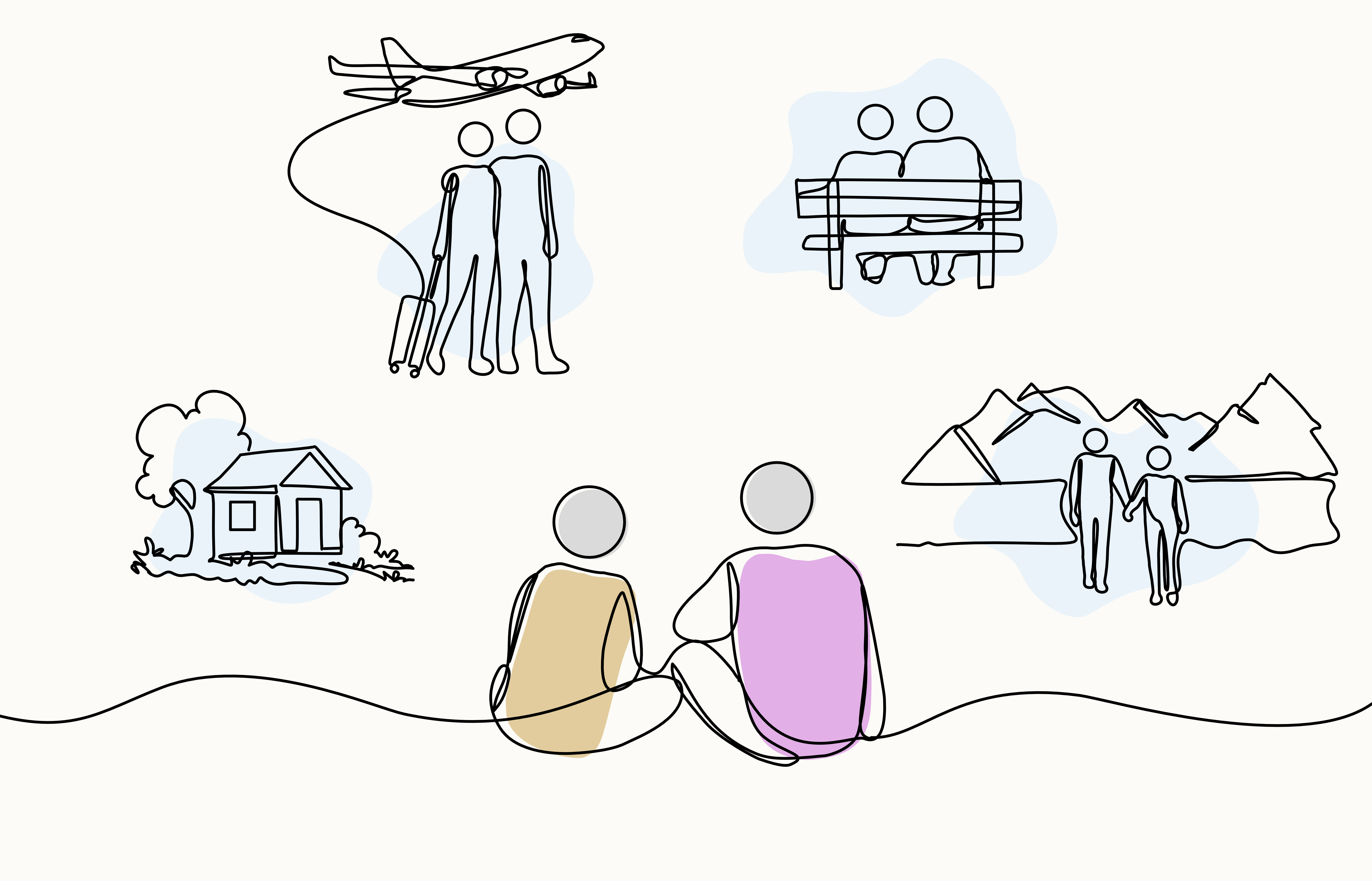
Big feelings without contracts
I still sometimes find myself wanting to say some sort of sweeping romantic thing. Below are some of the ways I, or partners of mine, have approached this.
Sharing the “proposal feeling”
At one point I shared what I called “proposal feelings” with my partner, Emil. What I said was roughly:
I don’t think marriage makes any sense. Despite this, there is still a part of my brain that romanticizes it and likes the idea. I think the thing that’s more important here are the feelings that cause my brain to want to lean into the idea of marriage. It’s reaching for the thing that people often do when they feel the way that I feel. The point is - I can see you continuing to be an important part of my life and I can imagine us being together through old age.
A proposal, traditionally, is an act that is meant to change the status of the relationship the moment it’s accepted. What I said to him doesn’t change anything about the relationship status. What it does is tell him where my head’s at! And a proposal is a very efficient way to express a feeling, which is probably why my brain reached for it. So I shared the feelings along with the meta-commentary around it, and left out the contract.
References to being older together
A similar version of this is to talk about scenarios when we’re much older.
Jamie liked to talk about how we will both make great old people and how it will be fun to hang out as our quirky older selves.
Emil recently mentioned that he likes the idea of smoking a pipe, but that he wouldn’t want to start until he’s much older. He then turned to me and asked me how I’d feel about it if he picked it up at 70. I could try to find ones that you like the smell of, he said. We both know that neither of us knows the reality of what things will be like when he’s 70, including whether or not he’ll still be interested in picking up smoking a pipe. It’s a nice thought, though, and it indicates to me that it’s something he can imagine. (For the record, when he’s 70 I’ll be 79. He has informed me he’s planning on making it to one hundred and that I’ll need to make it to a hundred and ten. I’m doing my best. :p)
Do you have additional ways you’ve done this? If so, I’d love to hear about them!
[future topic: the fellow travelers approach to making big life decisions]
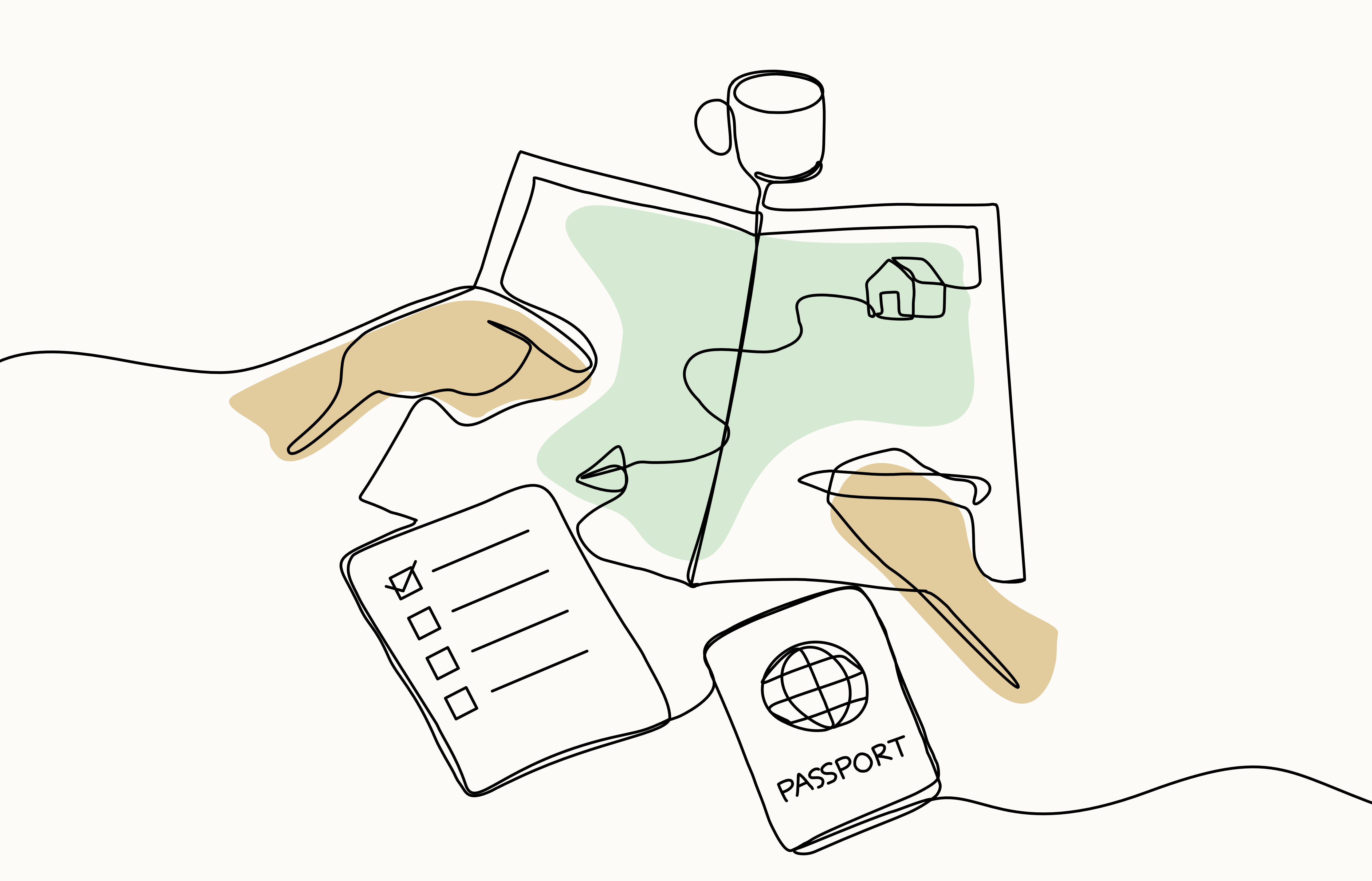
When a potential future becomes a plan
I’ve had people ask me, Ok then, so at what point does a potential future become a plan?
I think the answer is pretty simple: it moves from potential future to plan when it is put into motion.
A potential trip becomes a plan when we start booking flights. A potential future of living together becomes a plan when we start looking at places to live.
I don’t think the line between potential future and plan is all that important to see clearly. In fact, I rarely notice the moment it changes. And if we’re too fixated on that moment, we might try to push every potential future into a plan.
Talking about something we might do someday is fun on its own! It doesn’t need to go anywhere to have been worth saying. And if a daydream only counts once it becomes a plan, then every daydream turns into a kind of proposal.
Plans aren’t contracts either. I think about this the same way I think about consent in other contexts: you can say yes to something and then change your mind, and that has to be ok, otherwise it’s not consensual. I don’t think most of us are used to applying this to plans, but why not? (Note: if potential futures with a particular person never turn into plans, that is worth paying attention to. See the note on future faking below.)
So if something shifts for one or both of us after a plan has started being put into motion, I want us to be able to say so. I’d much rather deal with the annoying logistics of unwinding something than move in with someone who is no longer interested or go on a trip with someone that doesn’t want to be there. I’ve written about this before with cancelled plans. I want people around because they want to be there, not because it was already on the calendar.
Keeping the overlap honest
The importance of honest future talk doesn’t only apply to the sweeping romantic stuff. The same honesty matters if you see things that will change or limit how the future of the relationship will look.
So if I can see something going on for a long time, I say so. And if I can’t, or if I notice something that I don’t think is going to work between us, I try to say that as well.
I find this often comes up early in a connection. I might be really excited about someone and notice that there’s likely a ceiling on how far it can go due to any number of factors. People can sometimes be tempted to keep these things to themselves and hope the other person doesn’t notice. However, doing this means letting them relate to a version of you and a projection of the relationship that isn’t true. I’ve written before about this in terms of informed consent. If I’m holding back something that would change how someone wants to show up, I’ve made that decision on their behalf. Not cool!
Kids / no kids example: Jamie always wanted children, and I have mostly not wanted them. We were both upfront about this with each other from early on. I considered the possibility for a period of time, and when I reaffirmed having children wasn’t for me, I kept him updated about that. Which meant we both understood that at some point, when he found someone he wanted to have kids with, our relationship would change. This didn’t mean it would need to end, but that we acknowledged it would at least look different. We continued forward with an understanding that this change was very likely to happen at some point in our futures. It was simply a known thing between us, which meant we got to focus on enjoying the present!
Final thoughts
Nothing in this post is about saying less or holding back. I am such a supporter and encourager of people saying the things they feel clearly and often! I personally LOVE being super gushy towards the people I love. I like telling them how much they mean to me and the futures I can see with them.
In fact, I think this approach can make it much easier to talk about the future. There are a couple reasons for this. One, I don’t need to weigh whether a nice thought about a potential future is going to be taken as a promise I have to keep. And second, the other person isn’t put into a position of having to accept or decline a commitment to a particular future. (Granted, sometimes it takes people a moment to get used to how I talk about the future. I’m glad I now have this post to get it across clearly to new folks who come into my life!)
Not knowing the future doesn’t mean we shouldn’t talk about it. I can’t tell you with certainty what will make sense for us in the future, especially the distant future. I’m not going to pretend that I can. But what I am happy and excited to do is tell you how I feel today and the potential futures I see from here!
I have no idea who I’ll be or what I’ll want at a hundred and ten. I’m looking forward to finding out.
Before you go
Do you have additional ways you’ve done this?
I’d love to hear how other people handle this. Tell me in the comments! 🤗
Handle with Care: Future faking
Future faking is when someone says big sweeping things about the future when they don’t mean them. This is a manipulative tactic. Everything in this post assumes the person means what they’re saying. If they don’t, then the future talk doesn’t carry any weight.
It can be hard to tell early on if someone is doing this. I think the most reliable way to tell the difference is to watch how things develop and how the other person follows up with their stated wants and intentions. This is one of those places where there’s no good shortcut around building up a track record.
Art in this post made by Adora.
I really liked this and enjoyed reading it very much. One rule of thumb I have always liked is not making concrete plans further ahead than you've been together. I also really liked the part on 'proposal feelings'. As someone who has been married, then divorced and is now polyamorous and in a female led relationship, I appreciated you talking about the lovely fuzzy feelings of making those kinds of commitments without the actual contract :)
Using very subtle language, you explain something I’ve always sensed but tried to reject or swallow when it comes to relationships. I’d call myself cynical or jaded or xyz, when really, to love someone perfectly the same forever is actually the reach. I’ve always known/felt that long term partnership cannot wholly be known now, but reveals itself through time bc both parties want/uphold/create it. But marriage never seemed to be what actually holds it together, indeed I don’t think everything is meant to last “forever”.