

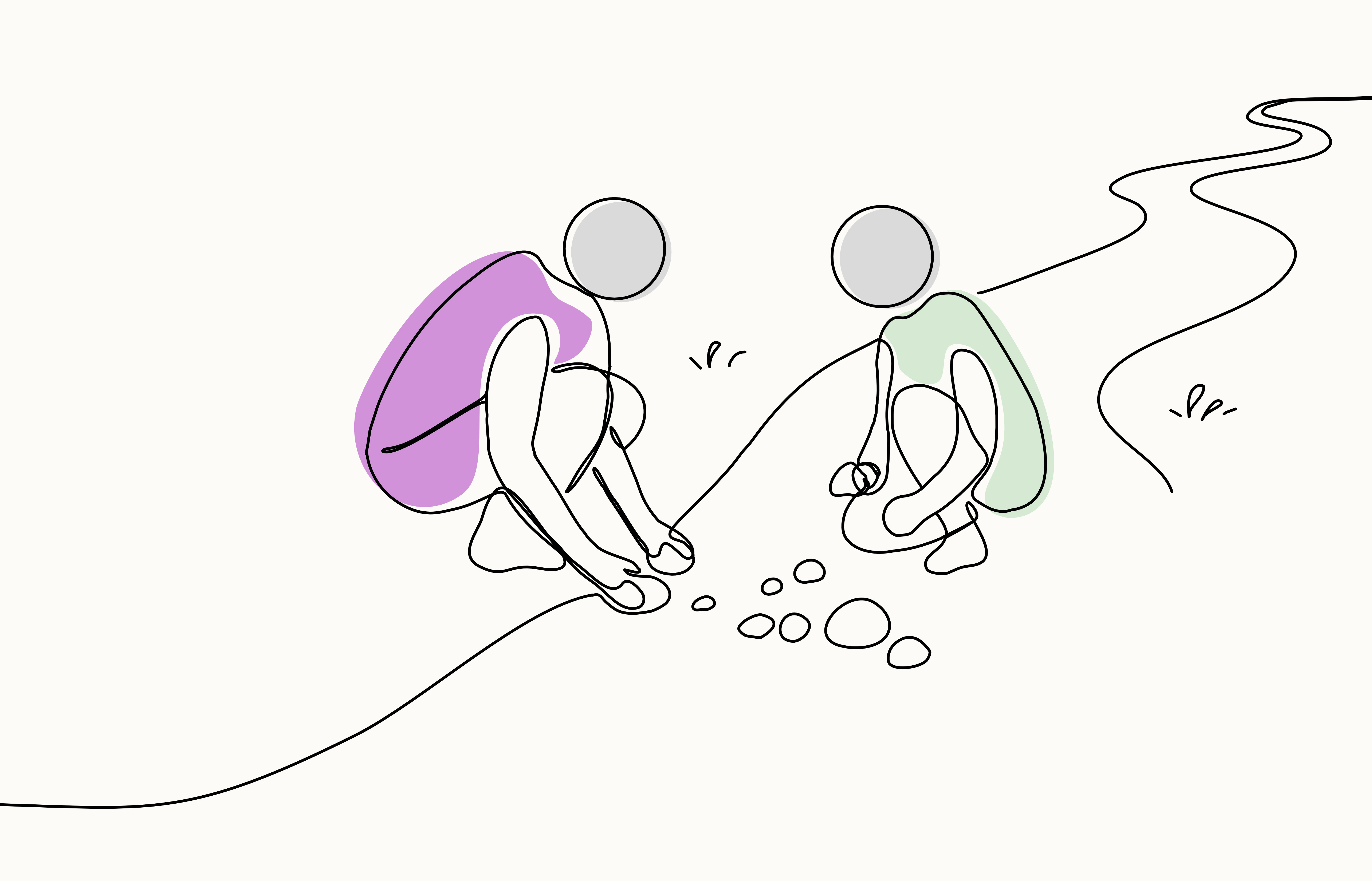
I received a comment on my first post about how commitment can feel hard to define in the context of relationship anarchy. As I thought about it, I realized I felt like I understood what it meant to me, but was struggling to put it into actual words. This post is my attempt to do that. What am I committing to, if I’m not promising forever?
(New here? I think of Relationship anarchy as being about building each connection out of the organic overlap between two people, without being bound by societal scripts. I wrote about the underlying ideas in Love without entitlement.)
Commitment, at least as most of us learned it, is a promise about the future. It’s often a promise to stick around and love each other until either you or the other person dies. We build ceremonies around it. We make the promise once, and then we expect ourselves and others to follow through, regardless of how things may change.
I understand the appeal. A promise about the future, especially a promise for a future that sounds really good to you at this moment, can feel really comforting. It can make things feel solid, and as if you now have one less thing in life that needs to be figured out.
Unfortunately, this is emotional security theater.
A promise about the future can make one feel secure, but it doesn’t necessarily come with actual security. It describes a structure built around a relationship, but it says nothing about the connection or how either person in the connection is doing as time goes on.
And unfortunately, it can do something worse than simply failing to work. A promise creates a mold. And if people or dynamics change, it’s common for people to start hiding the ways they no longer fit into that mold. And as time goes on, the promise stays technically intact, but becomes less true every year as a gap between what you promised and what you want grows bigger and continues to go unacknowledged. Sometimes things have to drift quite far before anyone is willing to name it.
Rather than thinking of commitment as a promised outcome, I like to think of it as a behavior.
A partner of mine got me thinking about this recently. Why is romance the only type of close relationship we treat like a contract? We typically don’t vow anything to our friends. Parents and children don’t exchange promises, and I don’t think anyone would argue the bond is weaker for that reason.
A parent might well promise to be there for them, and that’s a lovely thing to say. But it isn’t what the kid ends up knowing. The kid knows whether the parent shows up or not. A child can go their whole childhood without ever hearing a promise and be completely certain they’re loved and supported. Another can hear the promise every single year and learn exactly what it’s worth when the parent fails to show up when it’s important. The commitment is all about the behavior.
So, if I say I’m committed to someone… what am I saying yes to?
When I think about what I commit to, it splits into two kinds. Most of it is behavioral: how I show up, what I’ll tell you, what I do when things get hard. This is what I’ll start with. Then I’ll talk about committing to a particular circumstance for a particular stretch of time.
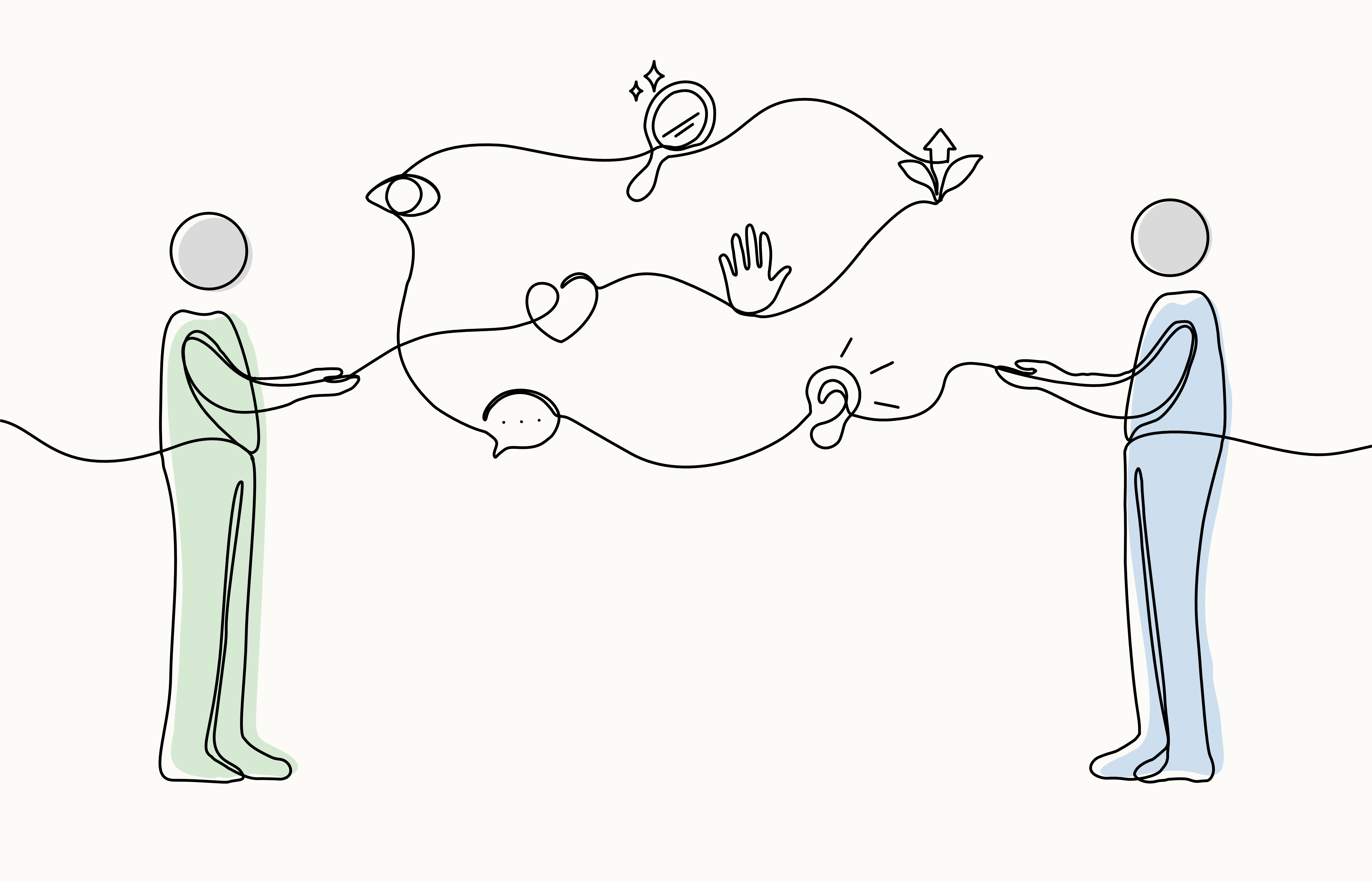
What am I committing to?
When you take away the promise about the future, what takes its place?
Kindness, care, and respect
Hopefully I don’t need to convince anyone that kindness should be part of any loving relationship. It matters most when things are difficult, which is also when it’s hardest.
Similarly with respect. It means treating someone as a whole person, with their own life and their own reasons for what they do, rather than as someone whose function is to fill a role for me. And it means respecting their choices, even when they decide something I wouldn’t have chosen for them.
And this doesn’t stop applying if a relationship ends. I’m always surprised when people break up with someone and then immediately banish the ex into a list of enemies. I want to carry the kindness and respect through a breakup, whether or not we end up as friends. (Though I’d love that too, if possible!)
Collaboration
These are about how we handle things together: approaching problems as a team, owning my part when I get it wrong, and supporting each other’s lives even when they diverge.
Being on the same team
When something goes wrong between us, I don’t want to try to win. I’m trying to look at the problem alongside you so that we can work together to understand what happened, sort it out, and handle it better next time.
How a relationship friction is approached can be the difference between a massive blowup and a difficult conversation. If I come in with an attack, it’s natural that I would be met with defense, and things will likely escalate. If we are collaborators, we are able to look at the situation together and we end the conversation understanding each other better.
If both parties are willing to approach conflict collaboratively, it can be a very connecting experience. It works best if both people are willing and able to look at their own part in things, which is the next piece.
In practice: During a friction, I try to keep checking that we’re still looking at the problem together rather than at each other. With all partners I’ve had in the last few years, we also debrief once we’ve had some time or space for things to settle. We go back over what happened, not to continue the fight, but to understand it. What set it off, what each of us was reacting to, what we’d want to do differently.
[future topic: frictions vs fights]
Personal accountability (aka owning my shit)
We all get reactive sometimes, and we all have blind spots. I think it’s important to be aware of that and to be open to other people pointing them out.
This of course requires a particular kind of emotional intelligence. Catching yourself mid-reaction. Hearing something hard and being willing to look at yourself to see if you can see the truth in it. Pretty much everyone will always have more work they could do in this area. The first step is just wanting to notice. (Note: this doesn’t mean the other person is always right. I’m not trying to encourage you to accept gaslighting, for example. What I’m talking about here is the willingness to be curious about it and think about it.)
If a partner tells me something came out rude, or that I’m being defensive, I’m committing to checking rather than reaching for the reason they’re wrong. When they’re right, saying so. And doing the work to do better next time.
In practice: part of the debrief described above is each of us doing our best to examine our own part in the friction. What did I do to contribute to it or make reconnecting more difficult?
[future topic: owning your shit]
Supporting each other’s lives
I want the people I love to be building lives they actually want. (And I aim to be close to people who want the same for me!) I don’t want either of us to shrink our lives or sacrifice something really important to us for the sake of the relationship.
More Than Two (my fav poly book) puts this as an ethical axiom: “The people in a relationship are more important than the relationship.” I’ve always thought this says it really well. The relationship serves the people in it, not the other way around.
Sometimes the overlap between us (what we want and what we’re able to give) will shrink. What I’m committing to is supporting this change when that happens. To be clear, this doesn’t mean not having feelings about it. It’s possible to find something difficult and work to support it anyways. What I will strive to not do is treat the change as a problem that must be solved by one of us needing to give up something important.
This kind of change can look like a lot of things. A move. A job that eats your time. A new relationship that changes how much of you I see. Or even a new hobby that changes your availability. Whatever it is, I want to be someone who supports you in living a life that best serves you, and I want that for me, too! It’s worth acknowledging that if a connection keeps adjusting such that the overlap becomes less and less, it is natural to adjust how much one wants to show up in response.
In practice: Years ago I was leaving Chicago for an opportunity elsewhere, and I asked my partner at the time if he wanted to come with me. He said no. He was supportive of the move, and Chicago was where he wanted to be.
And that was genuinely it. What was best for him was to stay, what was best for me was to go, and we both landed there with a lot of love for each other. Nobody made a case. Nobody treated it as a test of how much we cared. We stayed connected with phone calls and occasional visits and kept loving each other from a distance.
[future topic: readjusting to a new dynamic]
Communication
These are the ones about information. What I tell you, what I do with what you tell me, and whether my behavior matches. And making sure the picture between us stays current so as to minimize surprises.
Keeping the picture accurate
I’ve said it before, and I’ll say it again. Without a baseline of honesty, we cannot be truly close to someone.
The thing that most shapes a relationship is the overlap between what two people genuinely want and can give. Finding this overlap requires us to communicate our needs and boundaries honestly, including updating the other when something changes that may affect that overlap. If this doesn’t happen, then someone ends up with a false understanding of the relationship.
You can think about this in terms of informed consent. Withholding information that would potentially change the relationship leaves the other person unable to make an informed decision about how they want to show up in return. It essentially makes the decision for them. Not cool.
Concretely, this means keeping people accurately informed about where I stand with them. What I want, what I have capacity for, how I’m feeling about us, what’s shifted if anything. It also means being an honest person generally.
In practice: Early on in dating one of my current partners, I noticed I was getting a lot of mixed signals from him and it was difficult to get a clear read on what he wanted. This made it hard to know how to relate. It became clear it was not intentional on his part. He had some baggage he was working through and hadn’t fully sorted out yet. I told him clearly what I was interested in and asked him to think about it and do the same in return. I wasn’t asking him to relate in a particular way. I mostly just wanted accurate information so that I could update my best understanding of our overlap and update how I wanted to relate if needed.
Receiving honesty
In addition to being honest, I also want to receive your honesty in return.
If every time you tell me something that is difficult to hear I get defensive or angry, then I’m making it really difficult for you to be honest in the future. And if I receive your honesty and come to the conclusion you didn’t mean it, then I’m relating to a projected image rather than reality. Both aren’t great.
So the other half of the commitment is meeting hard information with curiosity instead of defense, and then updating my picture of you. What we’re aiming for is both people holding an accurate picture of the other.
This doesn’t mean I have to agree with everything I hear. Sometimes I take something in, sit with it, and still think it’s off. In that case, it’s worth having an additional conversation rather than quietly disregarding what I’ve heard.
In practice: I wrote about a version of this in the gremlin thoughts post. During a stretch when a partner’s new connection was bringing up hard feelings for me, what I wanted from him was full transparency, not a softened version designed to spare me. Keeping my picture of things accurate mattered more to me than avoiding pangs.
Being honest in word and action
If I’ve told you I want to be there for you in certain ways, then commitment means actually being there. And telling you if that changes.
The caveat is that I’m committing to this to the best of my ability, and ability ebbs and flows. We all have more capacity some days than others. When I have less, I’ll say so. What I won’t do is let you believe I’m available when I’m not.
In practice: During a stretch when I was badly burned out, I told the people close to me that I had a lot less bandwidth than usual. Nobody had to wonder why I was less available than normal, and they knew to adjust what they expected from me while it lasted. They were understanding about it, which helped a lot!
Minimizing surprises
Things change. I fully expect them to, and I wouldn’t promise otherwise. What I will commit to is that nobody gets blindsided by the change. If I follow through on the above honesty commitments, this should happen naturally.
If we’re both saying where we are as we go, then shifts happen gradually and together.
Imagine instead a couple where one person drifts over the span of many months, and the other finds out about this growing gap all at once at the end. It’s not the change itself that is troubling, but that it feels like an ambush. And it implies truth was withheld for a long time, which adds an extra sting.
I recently said to a partner: I’d be very surprised if you told me tomorrow that you didn’t want to be together anymore. Not because either of us promised otherwise, but because there’s nothing hidden between us that could suddenly change things from one day to the next. That feeling is what I want in all my close partnerships.
[future topic: Talking about the far-out future without promising the future]

Commitment to something outside the relationship
The above is about how I commit to relating to the other person in the relationship. There is also an additional kind of commitment, which is a commitment to tend to something outside of that relationship. These sit on a spectrum. Some are short and lightly held, some run for decades. What they share is that the commitment is to the endeavor itself, not to the relationship staying a particular shape.
If I sign a lease with someone, or buy property with them, I’m committing to making that arrangement work. Not to the relationship staying as it is, but to being a good person to live with for the term of the agreement, and to working with them on a respectful and dignified exit option should that become necessary.
The same logic can also apply to raising a child. Two people raising a child are committing to raising that child and providing that child with love and care. That commitment holds regardless of what happens to the romantic relationship between them. I think people often default to feeling that a co-parent must then be a primary partner. I don’t feel this is necessary. There are a lot of shapes a co-parenting relationship can take with the child still firmly at the center.
This can also apply to a particular stretch of someone’s life. This could include things like committing to see someone through a surgery recovery, finishing a PhD, a move or a job change ,or a period where things are just unusually hard. The commitment is to helping them through that thing, and it can hold even if the connection between the two people changes along the way.

When the picture stops being accurate
If nobody promised to stay forever, then what does breaking commitment look like?
Any of the commitments above can be broken. I’m going to focus on the commitments around honesty and maintaining a clear picture of the relationship because these are the commitments that are doing most of the work that a forever promise is intended to do.
Ask most people what breaking a commitment looks like in a monogamous relationship and they’ll probably say cheating. This, of course, isn’t a violation of the forever promise, but a violation of the promise of exclusivity. (A poly version of this might be violating safe sex agreements.)
But it’s worth asking what does the damage there. For most people it isn’t just about the sex. It’s also the discovery that they’ve been lied to for weeks, months, or years. They’ve been in a relationship that they didn’t have an accurate view of. Every decision they made during that stretch was made on bad information.
Notice that this doesn’t require anyone to break a standard “rule”. A person can be entirely faithful and uphold all agreements in a relationship and still let their partner spend a year believing things are fine while they’ve quietly checked out. Even if nothing is violated, the damage is still substantial.
What both of those have in common isn’t a broken rule. It’s the gap between what’s true and what the other person thinks is true.
What isn’t a breach of commitment
I’ve once come to understand that a particular partner wasn’t able to give me a certain kind of emotional support when I was having a hard time. That was disappointing to learn, but it wasn’t a breach. I adjusted my understanding of our overlap, including what I wanted to offer.
Someone’s capacity changing, someone’s feelings changing, someone’s life pulling them elsewhere These things are not failures. This is what happens when we live life. The commitment was not that things would never change. It was that I’d hear about it along the way and have space to adjust.
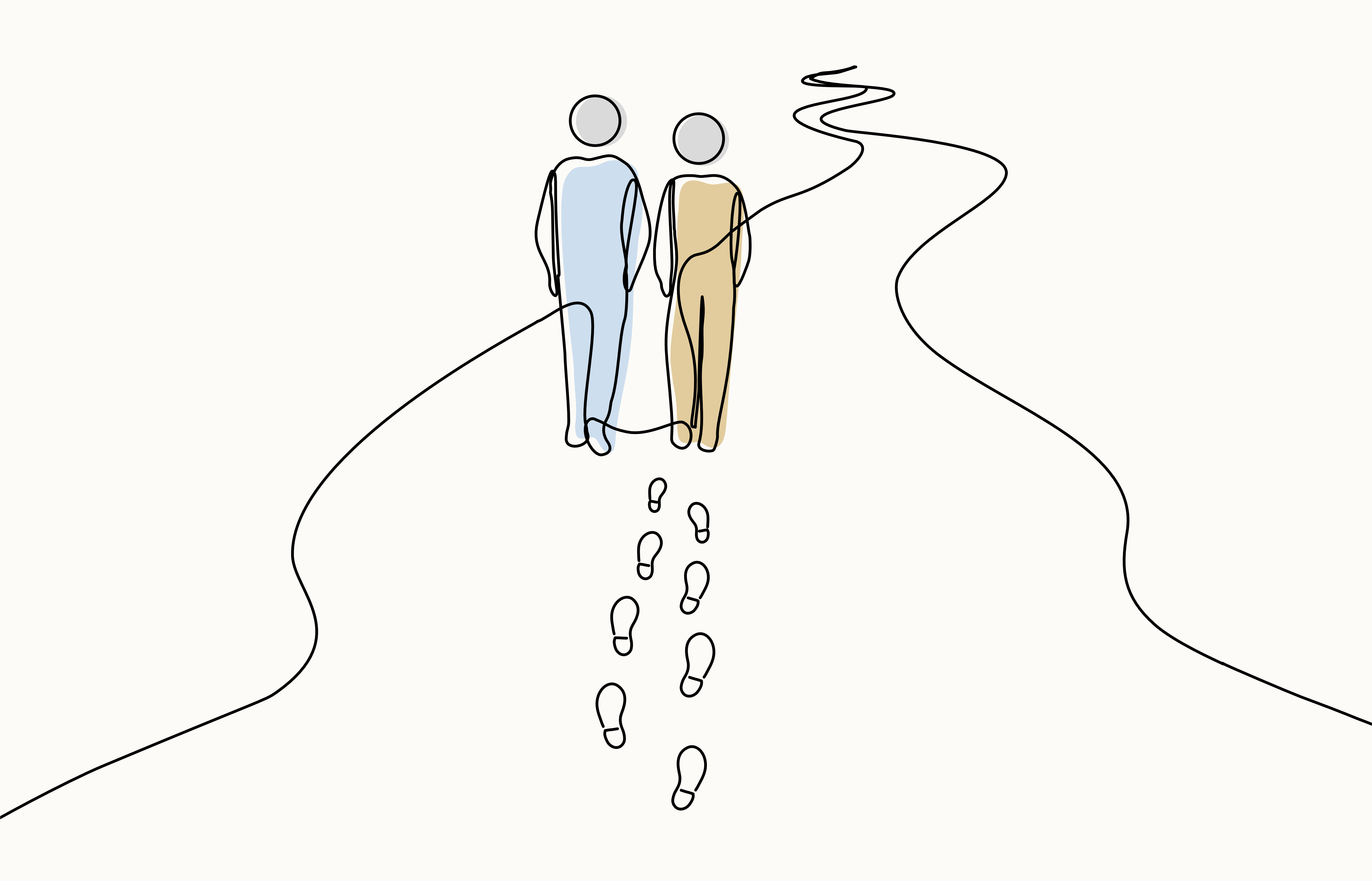
Where the security comes from
A track record and consistency
As you continue to have experiences with another person, you have more data, and a fuller picture of who they are and how they show up.
My partner Franz and I have hit frictions and come out the other side feeling closer, with a better understanding of each other. This has happened so consistently, and over a long enough stretch, that I have a huge sense of security that I can realistically expect this to continue to happen. Not because we agreed to, but because we’ve both shown up for each other and tackled issues collaboratively time and time again.
What’s consistent isn’t the shape of our relationship; that has changed plenty and will certainly change again. It’s what happens when something feels off.
Building a track record is something that can’t be rushed, and it’s why I think structural promises are so appealing. Consistency is only visible in retrospect. Nobody can provide this to you at the start. And there’s no way to skip ahead to it.
This works in reverse, too. As I’ve written before, we can’t force others to behave in certain ways. What we get to do is decide how close we want to be to people based on how they show up. A track record of frictions that don’t resolve, or of raising something making it worse, is still helpful data about that person. It just tells us something different.
Not having to guess
Probably the biggest source of security for me is when I don’t have to wonder.
Because we approach frictions as a team, raising something isn’t a risk to the relationship. Because I can trust a partner to take in a piece of unflattering information, I never have to weigh whether something is worth saying. It just gets said.
And it goes both ways. If I can trust that a partner will let me know when they feel hurt or when something feels off for them, that’s an enormous weight off my mind. No reading between lines. No second-guessing a yes. I honestly don’t think people who haven’t had this realize how much energy and emotional bandwidth the guessing takes up.
Something you’ll hear me say a lot: you can trust the yeses much more when you also hear the nos. If I know someone is willing to tell me when something doesn’t feel good, then when I get a yes, I can be fairly confident it’s a real yes.
Structures that feed rather than substitute
I should mention that I don’t think structures themselves are the enemy. More that structures that substitute for relational work can create a false sense of security while the actual connection goes unexamined. (As I said before, emotional security theater!)
There are also structures that feed that work! The main one I use in my closer partnerships is a relationship check-in called RADAR, from the Multiamory podcast. The funny part is that new things rarely come up in RADARs anymore. The scheduled conversations made the unscheduled ones easier and more frequent. Now they mostly serve as a recap and a nice connection point. 💜 I highly recommend them as a practice.
A looser one: Franz and I are long-distance, and when we’re in different places we default to longer calls on Sundays. We hold it lightly, though. If one of us has an event they’d like to go to that conflicts, we adjust.
Talking about the future
None of this means we can’t talk about the future. I do so often with people I’m close to. The difference is that we talk about the future as a collection of potential futures rather than one expected future, and about what the current “today us” wants rather than what we’re promising.
What this means in practice: I can tell a partner I can imagine us being together in old age, and they can hear it as information about where I'm at rather than as a contract they've just been handed. This creates an atmosphere that optimizes for honesty. I’m not filtering what I say out of worry that a partner pictures something different, since we’re not trying to land on a single agreed future anyway. And I’m not worried that saying it leaves them feeling obligated.
There’s a lot more to say about how I think about this, which is why I’m working on a full post on the topic. Coming soon!
Where this leaves us
So let’s get back to the question. What am I promising or not promising in a committed relationship?
I’m not promising to know the future. None of us can honestly do that. I’m also not promising that things will stay as they are.
What I am promising is that, to the best of my ability, I will be kind and respectful to you. I’ll be in your corner, and I’ll treat our frictions as something we’re solving together. I’ll own my part when I get it wrong. And I’ll be honest with you about where I stand and about what I can give.
To some, this can feel like it carries less weight than a vow. However, I think it’s more powerful. A vow is said once. This is a thing you have to keep doing.
Before you go
How do you define commitment?
Tell me in the comments or fill this out.
Resources
Multiamory’s Relationship RADAR: A monthly relationship check-in with a set format: review what’s happened since last time, agree on an agenda, talk through it, set action points, and reconnect at the end. The structure means things get raised before they turn into problems.
More than Two: if you’re going to read one poly book, this is the one I’d suggest!
Crucial Conversations: this is one of my favorite books of all time. It details why we should bring up the hard conversations rather than let them simmer, and gives a lot of helpful guidance on how to maintain a safe space while you do it!
Art in this post made by Adora.
Handle with Care
Any framework for relating can be picked up and used badly. Here are the ways I can see that happening with this one, whether it’s someone doing it to you or you doing it to yourself. As always, I’m hoping that naming them helps folks spot them in the wild.
“I can’t promise you anything” The most likely misuse is treating this as a license for vagueness. It is a refusal to be honest about where they stand. Nothing here means you can’t say anything about the future. One can minimally say what’s true for them right now. One can say what possible futures they can currently imagine. If someone genuinely doesn’t know what their feelings are telling them or what they want for next week, that can also be said honestly.
The people-pleasing trap. All of this requires knowing what you want, which is harder than it sounds and not equally available to everyone. I’ve written before about the risk of indexing too far on someone else’s comfort: if you constantly accommodate, you’re not finding an honest overlap anymore, you’re masking an incompatibility.
I don’t have a tidy fix. But it’s worth checking periodically whether you’re accommodating someone else at the cost of your own comfort or well-being. And perhaps check out Disease to Please. It’s an excellent book that people pleasers in my life have found helpful.
Lack of introspection rather than villainy. Sometimes someone simply hasn’t looked closely enough at themselves. For example, the partner I mentioned earlier who I couldn’t get a clear read on - he wasn’t being intentionally confusing or manipulative. He had blindspots and baggage he didn’t fully understand yet.
That doesn’t mean it’s going to hurt less by the people receiving it, but it does change how you might want to handle it. You can’t fix someone’s behavior or force them to be self aware. What you can do is point out what you’re seeing and ask whether they’re willing to look at it. Whether or not they are willing will tell you a lot. And you then get to decide how you want to relate to them going forward.
If you think of anything else I could add to the list, please let me know!